Resin bound driveways in Teesside
A resin bound driveway is a smooth, permeable surface of natural stone aggregate set in clear resin, typically £70–£120/m² installed in Teesside. It's fully SuDS-compliant, so no planning permission needed on front gardens, needs almost no maintenance, and lasts 15–25 years with a UV-stable resin.
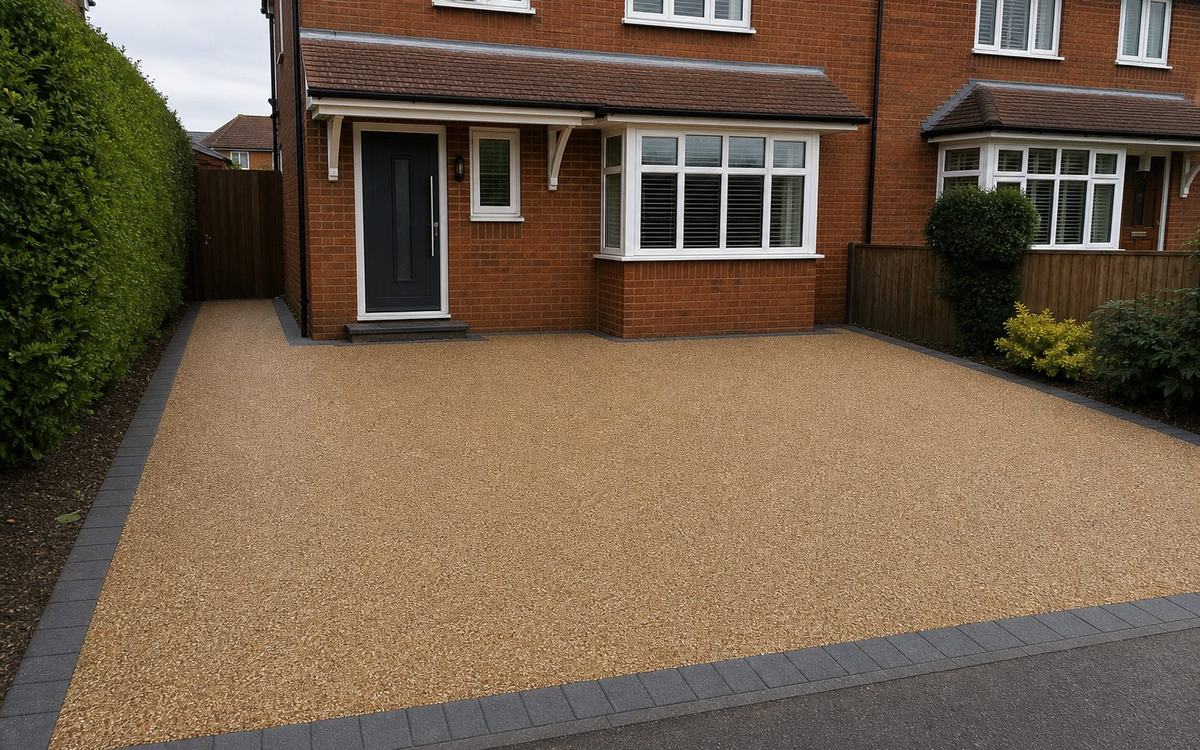
What is a resin bound driveway?
A resin bound driveway is made by mixing natural stone aggregate with a clear polyurethane resin and hand-trowelling it to a smooth, seamless finish around 15–18mm thick. Unlike loose gravel the stones are locked in place, and unlike resin bonded (a scattered alternative), a resin bound surface is fully permeable: rainwater drains straight through it into the ground below.
That permeability is the killer feature. Because water passes through rather than running off, resin bound is classed as a SuDS-compliant surface, you can pave an entire front garden without planning permission, which is why it has become the default upgrade on Teesside's newer estates.
How much does resin bound cost in Teesside?
Expect £70–£120/m² supplied and laid, depending on aggregate choice, depth and the base condition. A 50m² two-car drive typically totals £3,400–£6,000. Resin can sometimes overlay an existing sound tarmac or concrete base, which trims the excavation cost, but only if the base is genuinely sound and free-draining; on Teesside's clay a new porous sub-base is often the right call.
Why UV-stable resin matters on the coast
Two resins exist: UV-stable (aliphatic) and non-UV-stable (aromatic). Non-UV resin yellows and turns brittle in sunlight within a couple of years, a common horror story with cut-price installs. Every quote through us should specify a UV-stable resin as standard; the material cost difference is small, the lifespan difference is enormous. This matters doubly for exposed drives along the coast at Redcar, Seaton Carew and Hartlepool's marina, where drives take full sun plus salt air.
Colours and finishes
Aggregates range from silver greys and golden quartz to deep reds and charcoal mixes, usually in 1–3mm or 2–5mm stone sizes. Borders can be set in block paving or a contrasting resin colour, and the seamless finish works well around the curves and odd angles of older Teesside front gardens where cut blocks would look fussy.
Lifespan and maintenance
15–25 years with a UV-stable resin and a proper base. Maintenance is about as low as driveways get: a sweep and an occasional pressure wash on a gentle setting. No joints for weeds, no loose stone to migrate onto the pavement, and good grip underfoot in Teesside's wet winters. Avoid turning heavy wheels while stationary (power steering on the spot) which can scuff the surface, and keep solvent-based spills off it.
Resin bound vs the alternatives
Choose resin if you want the cleanest modern look with zero planning headaches. Choose block paving if you want a traditional patterned look and easy spot-repairs; tarmac for the best value on big areas; or see the head-to-head in our materials comparison guide.